
The Rule About Rinsing After Your Dog: When Pee Becomes an Issue
Inhalt
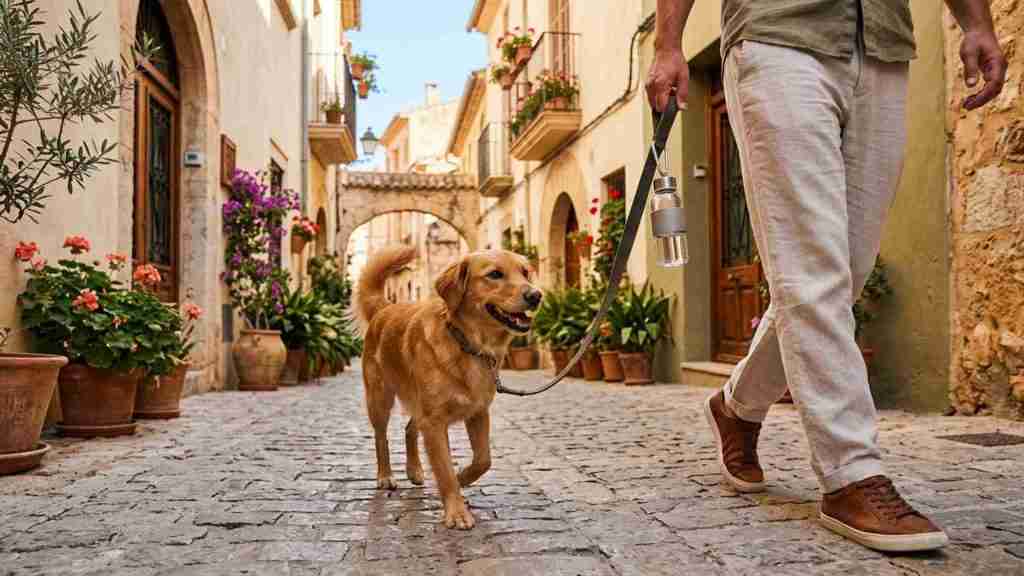
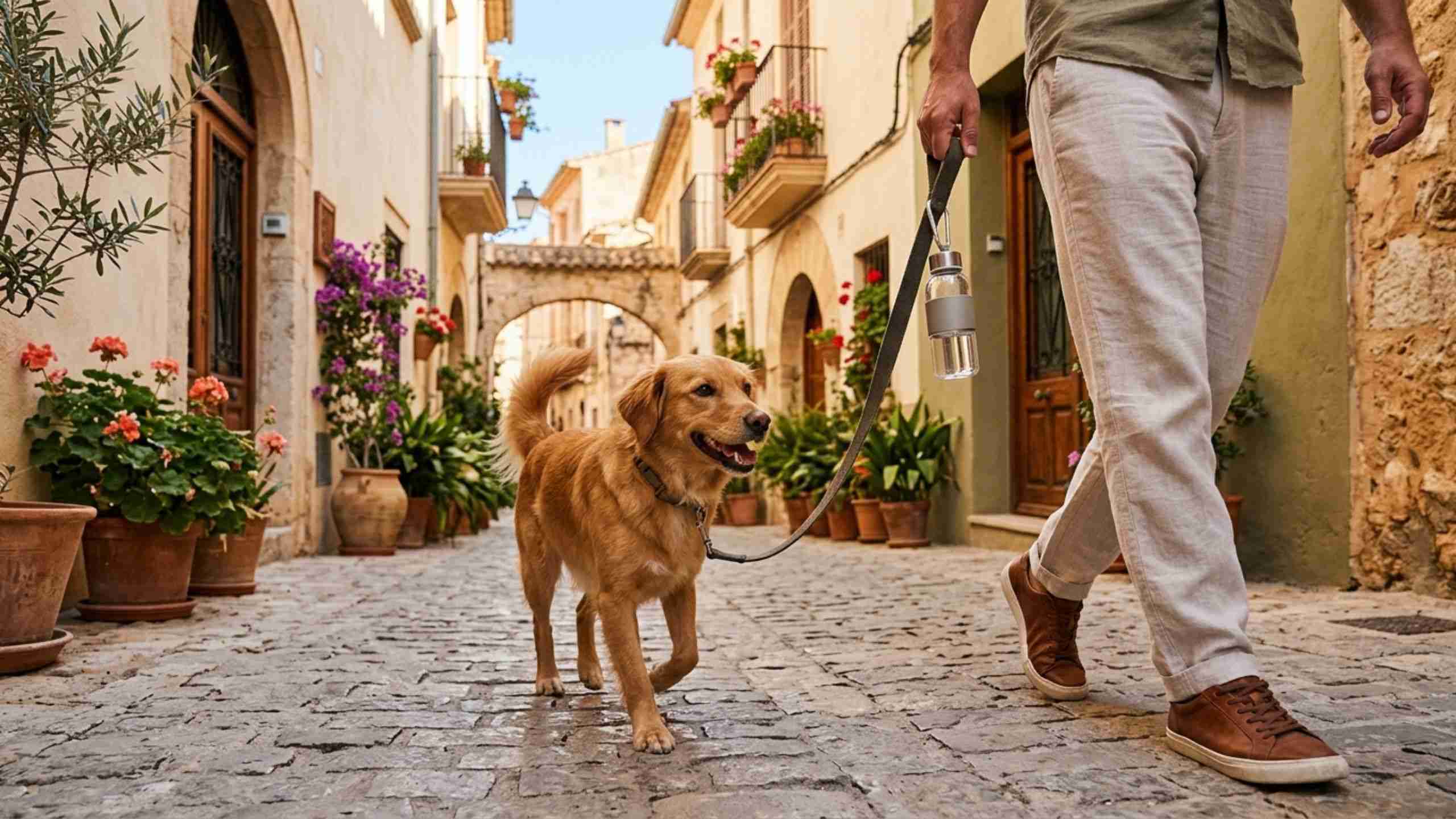
Most dog owners in the HolaWuff family have known this for a long time: Poop bags are a must-have for every walk. But in more and more places, that’s no longer enough. Anyone walking their dog there should also carry a water bottle to immediately dilute and flush away the dog’s urine. In some cities, this is now even mandatory, with hefty fines for violations. We’ve taken a look around the world to see where this issue is currently being discussed, has already been codified into regulations, or is simply standard practice.
Spain: A Pioneer in Imposing Clear Fines
In Spain, it is now mandatory in many municipalities to rinse the area after a dog urinates. In the Andalusian city of Almería, dog owners have been required to clean up their pets’ urine since 2019; there, a mixture of water and vinegar is recommended.
In Barcelona, a new municipal ordinance has been in effect since February 2026 that imposes fines of up to 300 euros if urine is not diluted with plain water; soap, vinegar, or bleach are expressly prohibited there. Dénia on the Costa Blanca, a place particularly familiar to the HolaWuff family, also tightened its animal welfare regulations accordingly in 2024: Anyone who does not have a water bottle on hand to dilute their dog’s waste risks fines ranging from 100 to 750 euros.
Similar rules apply in Seville, Alcalá de Henares, Alcobendas, Santa Pola, Oropesa del Mar, and Albacete, among other places, with fines ranging from about 60 to 1,500 euros, depending on the municipality.
In Málaga, the fines for repeated or particularly serious violations are even significantly higher. In many places in Spain, keeping a small water bottle on hand has become standard practice; in some residential neighborhoods, residents even place larger water bottles at the corners of their buildings to protect the facades from urine stains.
Italy: Como, Parma, and Livorno Have Seasonal Rules
Italy also has similar regulations. In Como, dog owners have long been required to carry a bottle, a spray bottle, or another container to dilute their dogs’ waste. Similar regulations have been in effect in Parma and Livorno since this year; in Livorno, they are limited to the warmer months from May through October.
Violations may result in fines of up to 500 euros. In addition, it is prohibited in Livorno to allow dogs to relieve themselves in the immediate vicinity of doors, windows, or building entrances.
Switzerland Follows Suit: Chiasso Sets a New Precedent
This is a brand-new issue in Ticino. The municipality of Chiasso has enacted a revised dog ordinance that requires dog owners to immediately dilute their pets’ urine with sufficient water and clean the affected area.
The regulation took effect in mid-August 2026 and, according to the municipality, is the first of its kind at the cantonal and federal levels in Switzerland. A warning is issued for the first offense, and a fine of 100 francs is imposed for repeat offenses. The regulation was prompted by numerous complaints from residents about odor nuisance, which was exacerbated by prolonged heat and drought.
Germany: No “flush-after” law, but clear rules of conduct
There is no nationwide requirement to clean up after dogs in Germany, as there is in Spain or Italy. However, as a general rule, dogs are not allowed to urinate just anywhere—for example, on the walls of other people’s homes, on hedges, or in playgrounds.
Violations of local regulations may be punishable by fines ranging from 10 to 150 euros; in cases of repeat offenses, the fines may be even higher.
If the urine causes detectable damage—for example, to plants or building facades—the owner may be liable for additional cleaning or replacement costs. However, German regulatory law does not currently impose an explicit obligation to rinse with water every time.
U.S.: No uniform rule; much depends on the HOA
In the United States, there is no federal law governing dog urine in public spaces; the issue is regulated entirely by cities, municipalities, and homeowners’ associations (HOAs).
Although most municipalities require pet owners to clean up feces—with fines ranging from $50 to $500—an explicit legal requirement to dilute urine is rarely enshrined in law.
In many residential complexes, disputes over the smell of urine or scorched grass are more likely to be handled by the HOA than by city officials; there, carrying water is often recommended but not required.
Japan: Not mandatory, but a very strong social norm
While there is no nationwide legal requirement to rinse off urine in Japan, there is a strong social norm. In many cities, it is considered good manners to use a small water bottle to rinse off urine on sidewalks, walls, or lampposts after a walk.
Some city districts, such as Tokyo’s Shinjuku, have even installed signs to that effect in the past. In Tokyo, a public post featuring a kind of flush button—where dogs are allowed to urinate and which then automatically flushes with water—has also become well-known.
Middle East: Community Solutions in Dubai
The issue has also gained attention outside of Europe and Asia. In Dubai Marina, the real estate developer Emaar temporarily banned dogs from the promenade, partly due to hygiene concerns.
In response, dog owners have proposed a solution of their own: carrying water and cleaning supplies to dilute urine immediately, along with a proposal for voluntary fines for violations. This shows that rules regarding the obligation to rinse away urine are being developed not only by authorities but also, in some cases, by residents and community initiatives themselves.
Why These Rules Come About in the First Place
The situation is similar around the world: The number of dogs in cities is steadily increasing, and with it, complaints about odors, stains on sidewalks and building facades, and conflicts between dog owners and neighbors or business owners.
The odor becomes more intense more quickly, especially in warm, dry climates, which is why such regulations are enacted with above-average frequency in Southern European and Mediterranean regions. For municipalities, comprehensive cleaning with high-pressure washers is hardly affordable, which is why the responsibility increasingly falls directly on property owners.
What This Means for Traveling with a Dog
For anyone traveling or moving with their dog, it’s worth checking the local regulations, since the rules are usually set by each municipality individually and can vary greatly, even within the same country. Here are a few practical tips for everyday life:
- In many countries, a small, refillable water bottle is now just as much a part of one’s gear as a poop bag, regardless of whether there is actually a requirement to carry one in that location.
- In most cases, plain water is sufficient for diluting; some municipalities also recommend using vinegar water to combat odors.
- Local regulations and fines vary greatly from city to city; doing a little research before your trip will help you avoid unpleasant surprises.
- If you’re unsure, it’s best to follow the stricter rule as a general guideline and bring water with you.
A trend that is likely to continue spreading
With Chiasso, the mandatory post-flushing requirement reached Switzerland for the first time in 2026, and given the number of complaints in many cities, from Andalusia to Dubai, it is likely that other municipalities around the world will follow suit.
For the HolaWuff family, this is a good reason to stay on top of this issue, especially for those who regularly take their dogs out or travel with them. We’ll keep you updated here as soon as new regulations are announced.
Have you discovered any other countries or cities where this is required? What do you think of this rule? Let us know!