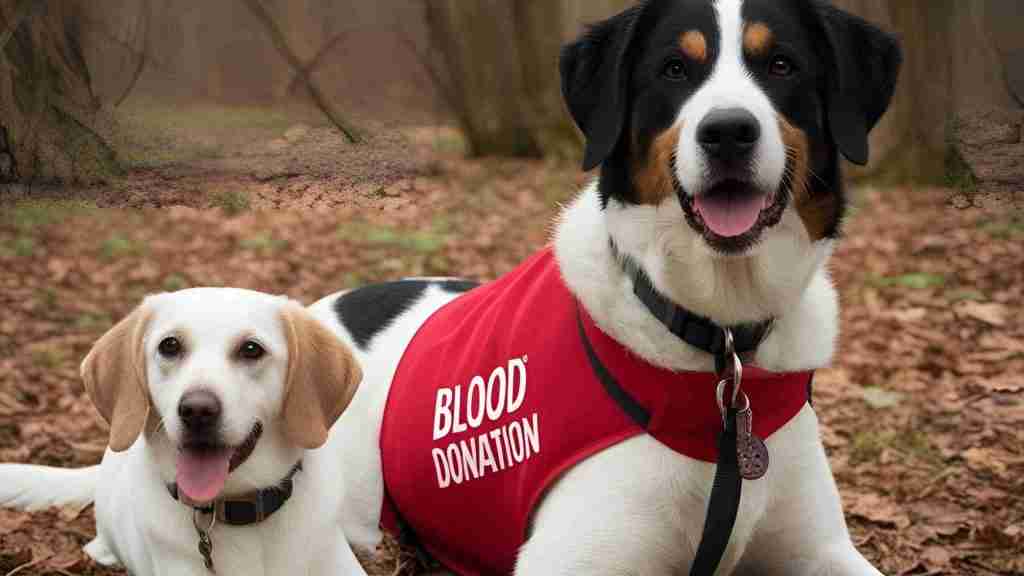


Blood donation for dogs: Lifesavers on four paws – Why blood donations for dogs are so important
Inhalt
If a dog falls seriously ill, suffers an accident or needs urgent surgery, a blood transfusion is often necessary to save its life. However, just as with humans, the supply of blood products for our four-legged friends also depends on voluntary blood donors. As a responsible dog owner, you should know that in such situations your dog could not only become a recipient, but also a donor. In this article, you can find out everything you need to know about blood donation for dogs.
Why is blood donation important in dogs?
Blood transfusions can save dogs’ lives after accidents, operations or chronic diseases such as anemia or certain infectious diseases. As blood cannot be produced artificially, it is particularly important that sufficient donated blood from healthy dogs is available. Hospitals and veterinary practices around the world are therefore increasingly relying on the willingness of dog owners to make their pets available as blood donors.
Who can donate blood – requirements for your dog
Not every dog can automatically become a blood donor. There are important requirements that must be met:
- Age: As a rule, dogs must be between one and eight years old
- Weight: A minimum weight of around 25 kg is usually required to ensure safe and sufficient blood collection
- Health: Your dog must be healthy and have no chronic illnesses or infections. Regular vaccinations, deworming and parasite treatments must be documented
- Behavior: Your dog should be calm and cooperative, as the blood sampling procedure takes a few minutes and requires a calm position
A thorough health check by the vet before every blood donation ensures both the quality of the donated blood and the well-being of your dog.
The blood donation process for dogs
The blood donation process is relatively simple and safe for your dog. First, a general health check is carried out, during which your dog’s heart rate, temperature, weight and general condition are checked. A blood sample is then taken to determine the blood group and other health parameters.
The actual blood collection usually only takes a few minutes. Your dog lies relaxed on its side while the blood is drawn using a sterile needle. On average, around 400 to 500 milliliters of blood are donated. After the blood sample has been taken, your dog will be given water and a little refreshment to stabilize his circulation.
Blood groups in dogs – why are they important?
Dogs have different blood groups, whereby the so-called DEA system (Dog Erythrocyte Antigen) is used. The most important and best known are DEA 1 positive and DEA 1 negative. Determining the blood group is important in order to avoid possible incompatibility reactions during transfusion. There is a particularly high demand for DEA 1 negative blood, as it is universally compatible with all dogs.
Where can you find dog blood banks – worldwide or regional?
Dog blood banks and veterinary facilities that accept blood donations for dogs can now be found all over the world. These are particularly widespread in Europe and North America, but specialized facilities are also emerging in Australia, New Zealand and increasingly in Asia. Large veterinary clinics, university hospitals and specialized veterinarians offer regular blood donation appointments and have the necessary storage and processing facilities to optimally preserve the donated blood and use it when needed.
Risks and side effects – what you should look out for
Blood donations are generally low-risk, but minor side effects such as tiredness or slight circulatory problems can occur in rare cases. Your dog should be physically rested and have sufficient water available on the day of the blood donation for dogs. If your dog shows unusual behavior after a donation, you should contact your vet immediately. However, these effects are usually minimal and disappear completely within a few hours.
How often can your dog donate blood?
Dogs are normally allowed to donate blood every two to three months, i.e. a maximum of four to six times a year. It is important that you give your dog sufficient rest and recovery time between donations to ensure his health and well-being.
Your dog as a lifesaver – Become part of the solution!
Blood donations for dogs are an important and often life-saving measure that is gaining more and more recognition and support. As a dog owner, you have the opportunity to actively do something good and potentially save the lives of other dogs. Find out about blood donation opportunities for dogs in your region and discuss with your vet whether your dog is suitable as a donor. In this way, you too can help to ensure that there is always enough donated blood available to save lives and alleviate suffering.